Yamasaki Lecture
On October 10, 2018 at 7 PM there will be an event at the downtown Ann Arbor District Library. The event is free and no sign up is required to attend.
Dale Gyure, author of Minoru Yamasaki: Humanist Architecture for a Modernist World will present a power-point illustrated lecture on Yamasaki. Best known as the architect for the infamous Twin Towers, Yamasaki was based in Detroit for much of his career. His local work includes four unique buildings on Wayne University’s campus, the Michigan Consolidated Gas building in downtown Detroit, and the Chelsea, Michigan high school. Gyure teaches architectural history and theory at Lawrence Tech and is the author of many books on architectural subjects.
Born to Japanese immigrant parents in Seattle, Minoru Yamasaki (1912–1986) became one of the towering figures of midcentury architecture, even appearing on the cover of Time magazine in 1963. His self-proclaimed humanist designs merged the modern materials and functional considerations of postwar American architecture with traditional elements such as arches and colonnades. Yamasaki’s celebrated and iconic projects of the 1950s and ’60s, including the Lambert–St. Louis Airport and the U.S. Science Pavilion in Seattle, garnered popular acclaim.
Despite this initial success, Yamasaki’s reputation began to decline in the 1970s with the mixed critical reception of the World Trade Center in New York, one of the most publicized projects in the world at the time, and the spectacular failure of St. Louis’s Pruitt-Igoe Apartments, which came to symbolize the flaws of midcentury urban renewal policy. And as architecture moved in a more critical direction influenced by postmodern theory, Yamasaki seemed increasingly old-fashioned. In the first book to examine Yamasaki’s life and career, Dale Allen Gyure draws on a wealth of previously unpublished archival material, and nearly 200 images, to contextualize his work against the framework of midcentury modernism and explore his initial successes, his personal struggles—including with racism—and the tension his work ultimately found in the divide between popular and critical taste.
Dale Allen Gyure, Ph.D., is Professor and Associate Chair of Architecture at Lawrence Technological University in Southfield, Michigan, where he teaches classes in architectural history and theory. Dr. Gyure’s research focuses on American architecture of the nineteenth and twentieth centuries, particularly the intersections of architecture, education, and society. His published works include the books Frank Lloyd Wright’s Florida Southern College (2010), The Chicago Schoolhouse, 1856-2006: High School Architecture and Educational Reform (2011), Minoru Yamasaki: Humanist Architecture for a Modernist World (2017), and The Schoolroom: A Social History of Teaching and Learning (2018), as well as numerous book chapters and articles. Professor Gyure has served on the Boards of Directors of the Society of Architectural Historians and the Frank Lloyd Wright Building Conservancy, and is a current member of the Michigan Historic Preservation Review Board.
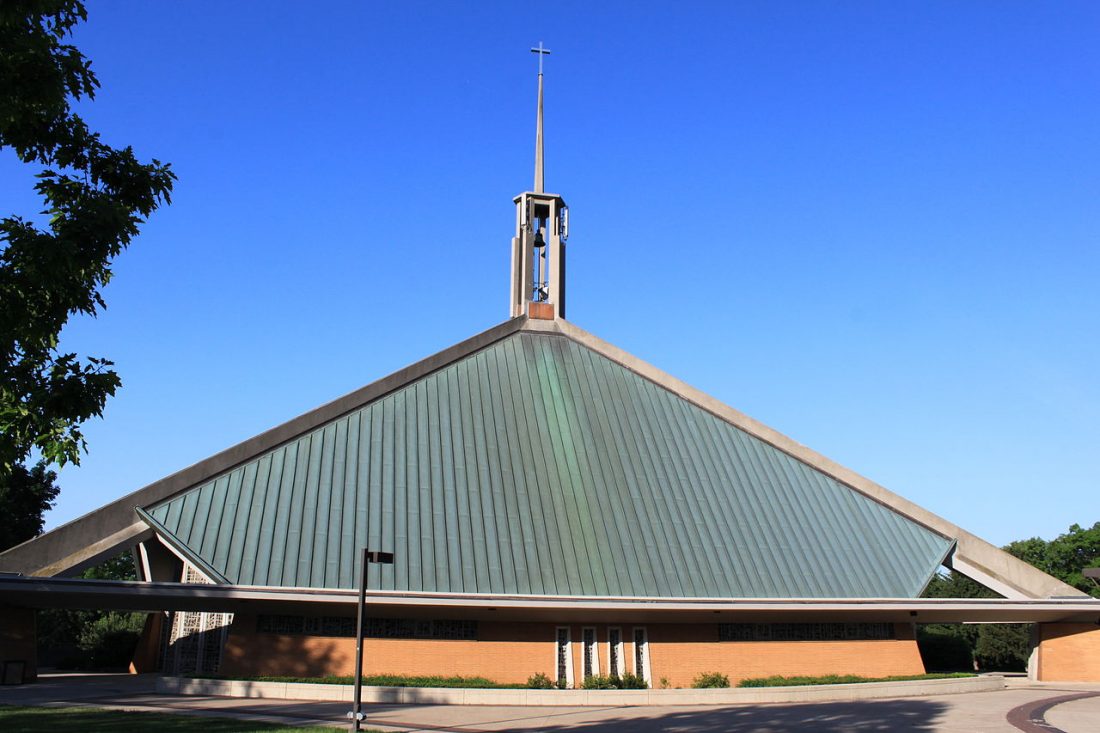
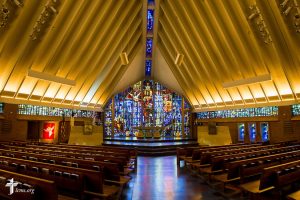 The Chapel of the Holy Trinity, a gift of Michigan Lutheran church congregations, was designed with three sides so that its tall spire would cast its shadow over each of the academic buildings, reminding students, faculty and staff of the college’s primary purpose. It was completed in 1964. The chapel features multiple ‘faceted glass’ windows executed by the French artist Gabriel Loire; Barbara Krueger, a specialist on stained glass, will be there to answer questions about them. We hope you can join us on our tour of this notable MCM campus in Ann Arbor!
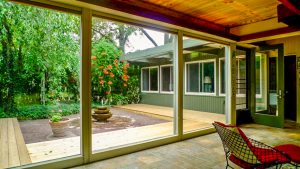
 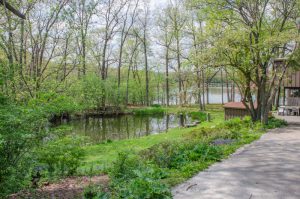 A small enclave of 32 houses on Thornoaks Drive and Huron River Service Drive, it’s located off East Huron Drive just before the U.S. 23 underpass. On April 18 the Washtenaw County Board of Commissioners voted approval of a request by the residents to designate it as an historic district thus protecting it from demolition or unfortunate alterations.
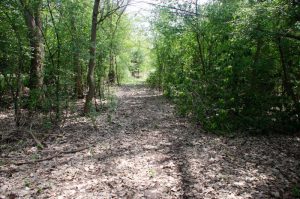 Thornoaks was developed in 1957-1961 by architect James Livingston and builder E. E. Kurtz. They carefully laid out the lots to take advantage of views of the Huron River, South Pond, or the woods. As the parcels were sold, Livingston and Kurtz reviewed the site plans, as the incorporation document states, for “materials, harmony of external design with external structure… placement of walls or fences… and to the location with respect to topography.”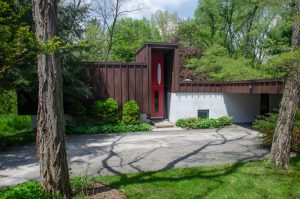
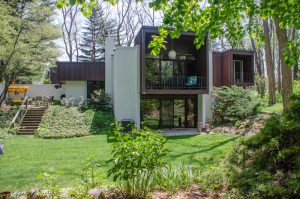
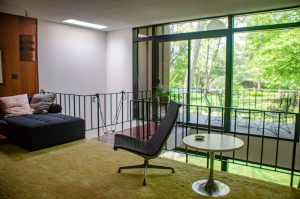
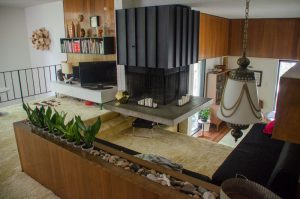
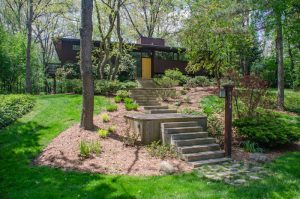
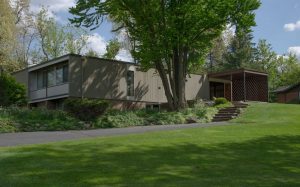 On the afternoon of January 13th the Aarons, who soon intend to sell the Metcalf home known as the Botch House, will be holding an open house for our a2modern friends. Tickets may be purchased